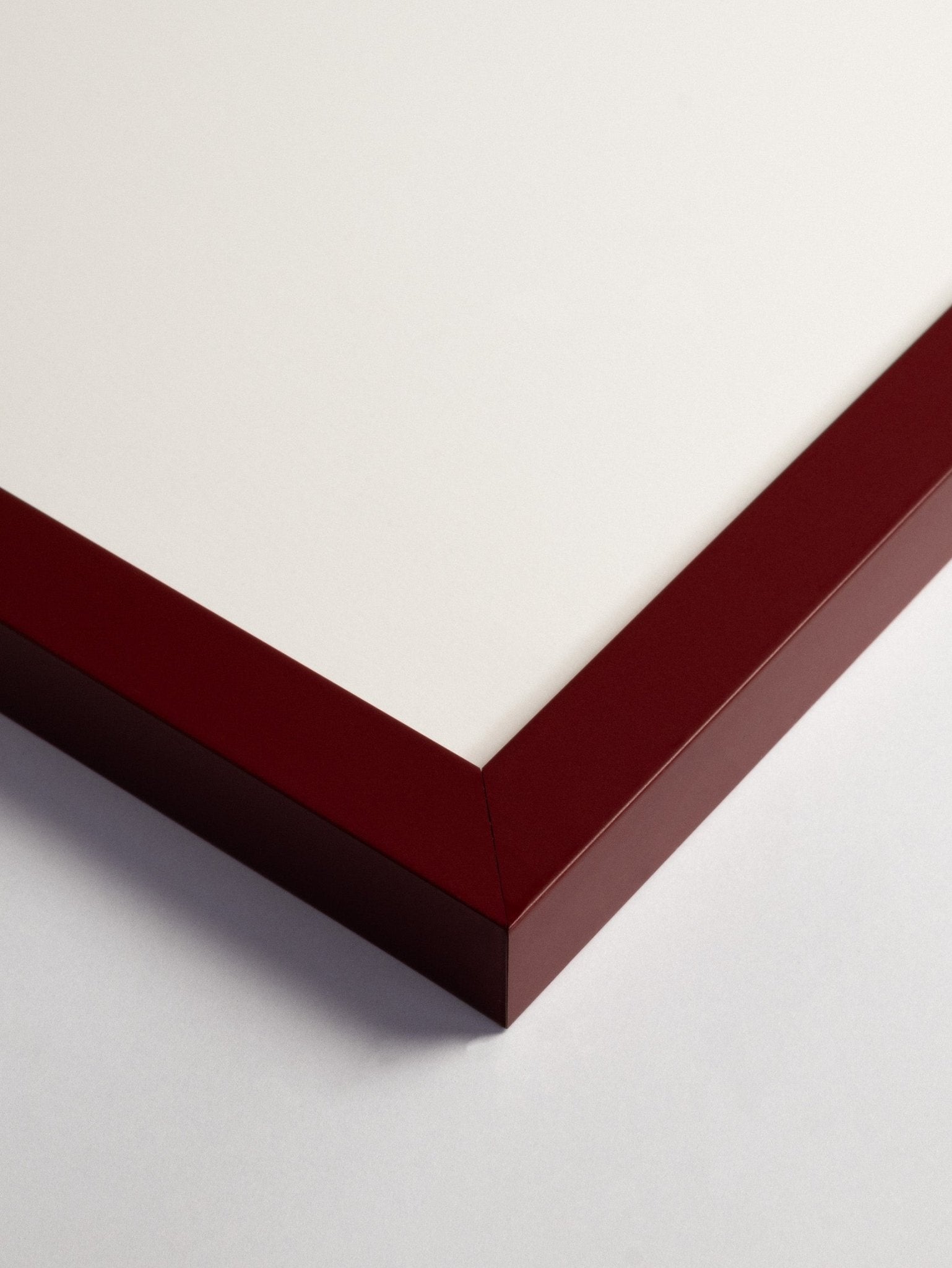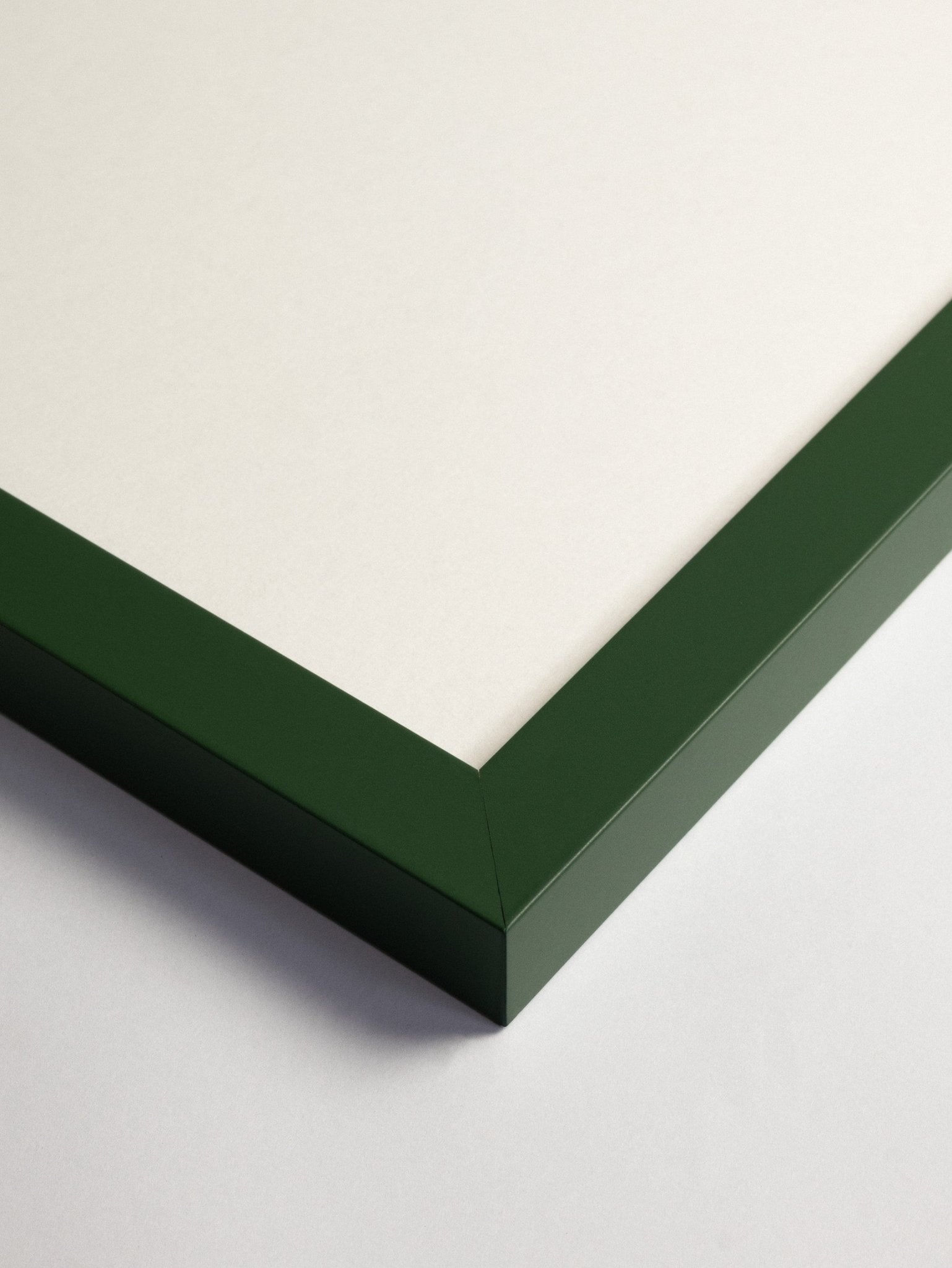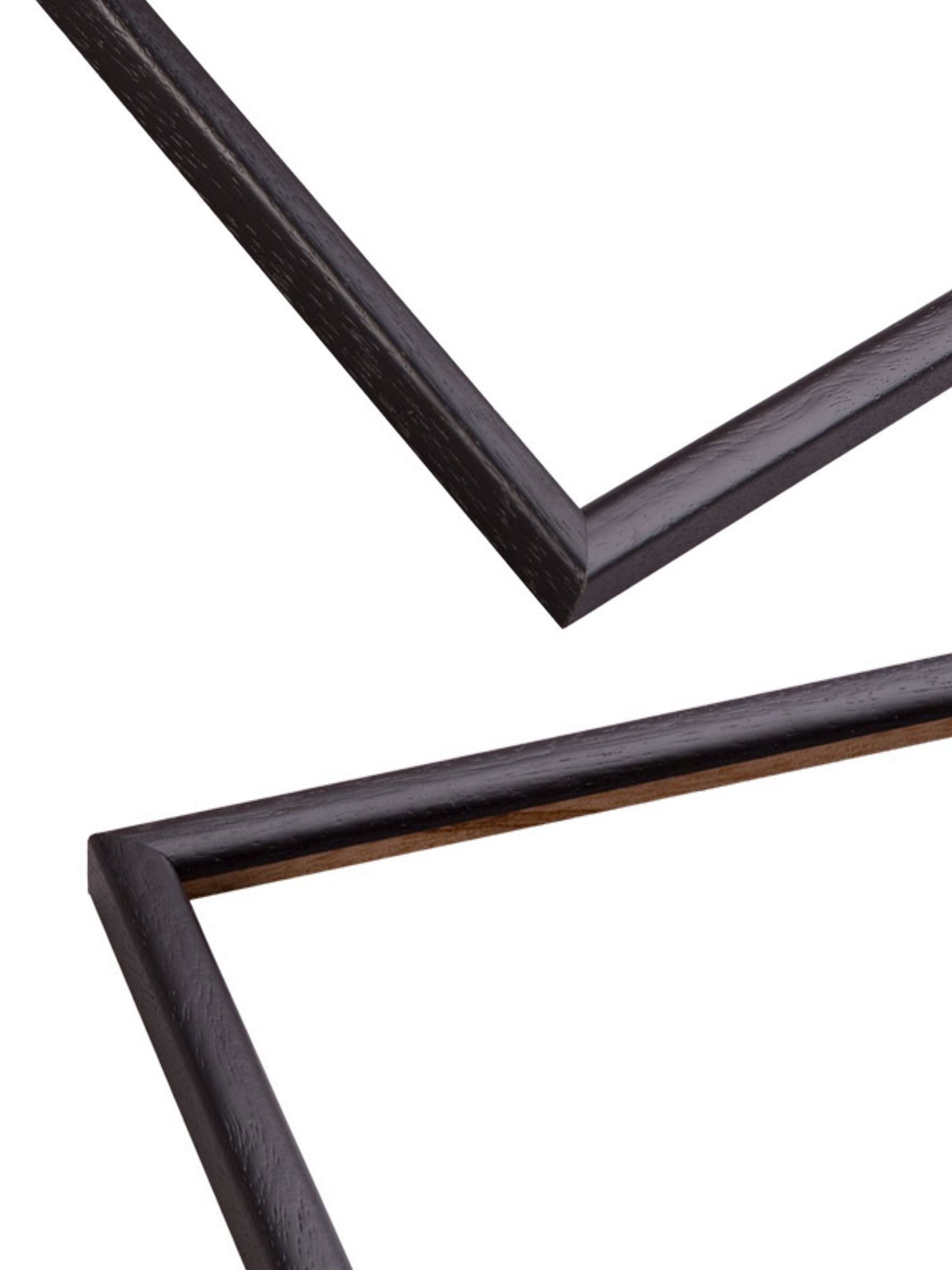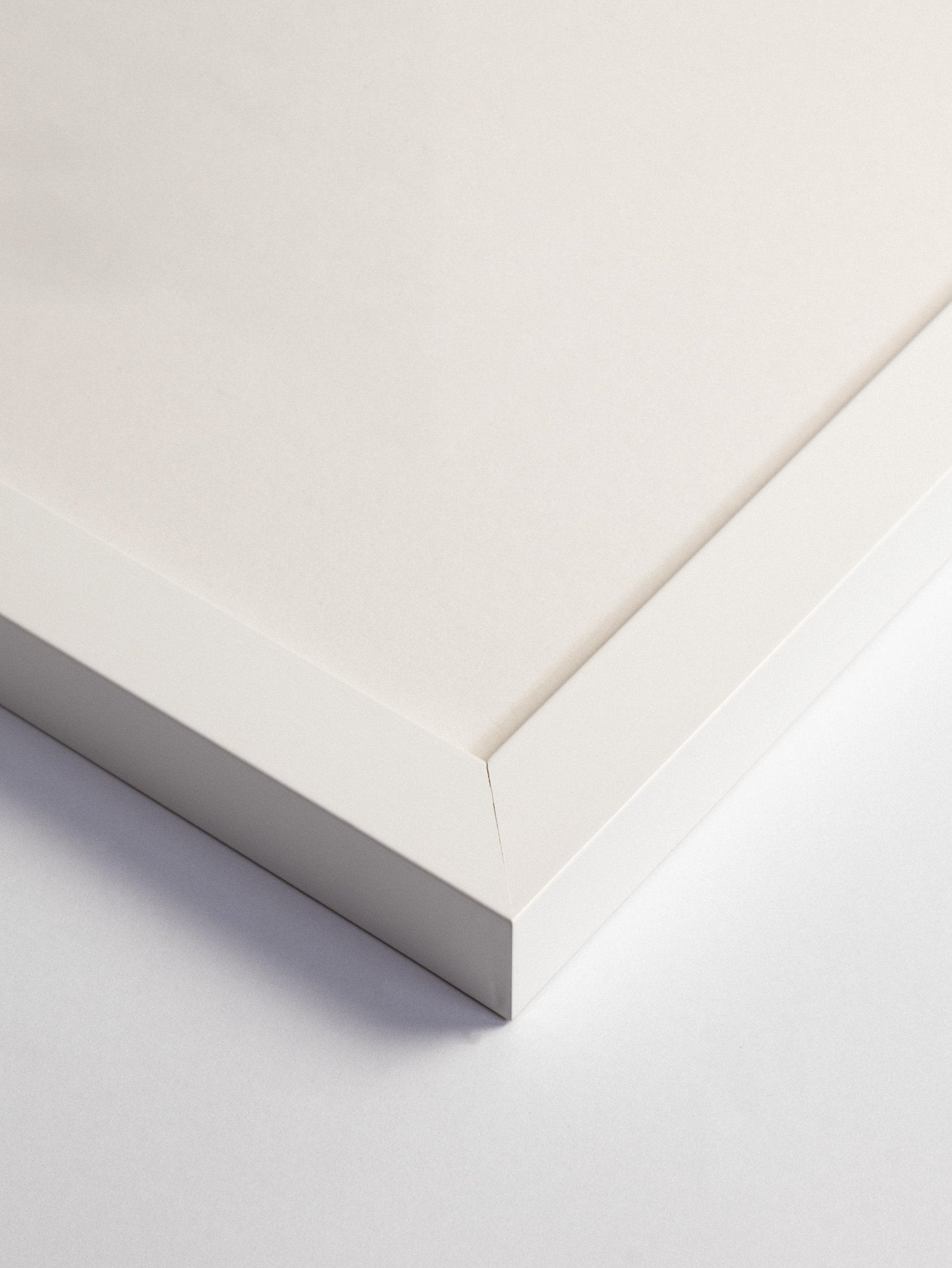
The short version: if your canvas is stretched over a wooden frame, which most are, the neatest way to frame it is with a canvas tray frame, sometimes called a floater frame. The canvas sits inside with a narrow gap all the way round, so it looks like it's floating, and nothing covers the front of the painting. A flat canvas board can go in an ordinary picture frame, and a rolled, unstretched canvas needs stretching first.
There are four ways to do it, depending on the canvas you have and how much work you want to put in. This guide compares them, then walks through measuring and fitting.
In this guide
First, work out what you've got
| Your canvas | How to tell | What to frame it in |
|---|---|---|
| Stretched canvas | Canvas wrapped round a wooden frame (stretcher bars), usually 18 to 40 mm deep, stapled at the back or sides | A canvas tray frame, or a deep standard frame |
| Canvas board or panel | Canvas glued to a thin, flat board, a few millimetres thick | A standard picture frame, like a print |
| Rolled, unstretched canvas | Loose canvas with no frame behind it | Get it stretched first, then frame it as a stretched canvas. Or frame it flat in a standard frame. |
Four ways to frame a canvas, compared
| Method | Best for | Good | Watch out for |
|---|---|---|---|
| Tray (floater) frame | Stretched canvases | Whole painting visible, including the edges. Gallery look. Easy to fit. | Canvas depth needs to suit the frame depth. |
| Deep standard frame | Stretched canvases, for a traditional look | Classic framed look. Hides scruffy edges. | The frame's lip covers a few millimetres of the painting. The frame needs a rebate (the step at the back) as deep as the canvas, held in with offset clips. |
| Standard frame | Canvas boards and flat canvas | Simple, like framing a print. Can add a mount. | Not suitable for stretched canvas, which is usually too deep. |
| DIY frame | Confident DIYers with a mitre saw | Cheapest if you already have the tools. | Getting the mitres tight takes practice; any gap shows. |
For most people with a stretched canvas, the tray frame is the best balance of look and ease, which is why it's what galleries tend to use.
What is a tray frame?
Look at one from the side and it's L-shaped. There's a base that the canvas sits on, and an outer edge that wraps round it. When the canvas goes in, there's a small gap of around 5 mm between it and the frame on every side.

That shadow gap is what makes the painting look like it's floating, and it means you see the whole painting, right up to the edges. It also does a nice job of hiding scruffy stapled sides.
Getting the depth right
This is the part most guides skip, and it's what decides how the finished piece looks from the side.
- Canvas about the same depth as the frame: the front of the painting sits level with the front of the frame. This is the cleanest, most gallery-like look.
- Canvas deeper than the frame: the painting stands proud of the frame. It still works, and some people like it, but the frame looks more like a border.
- Canvas much shallower than the frame: the painting sits back inside the frame, like a box. Fine for small pieces, but on a big canvas it can look sunken.
So measure your canvas depth before you choose, and compare it with the frame depth listed on each of our tray frame pages. Common canvas depths are about 18 mm (standard) and about 38 mm (deep edge or gallery canvas).
Measuring your canvas
- Measure the width and height, edge to edge, at the widest point. Canvases aren't always perfectly square, so measure both ends.
- Measure the depth, meaning how thick the wooden stretcher bars are.
- Choose the tray frame size that matches your canvas. The gap is already built into the frame, so don't add anything on.
- Check the depth as above.
If your canvas is an unusual size, we can make a made to measure frame to fit it (UK delivery only).
Fitting the canvas
- Lay the frame face down on something soft and clean, like a towel or blanket.
- Drop the canvas in face down and centre it, so the gap looks the same on all four sides.
- Fix it to the base of the frame. Ours use hook-and-loop pads, the Velcro kind, which means you can lift and reposition the canvas until the gap is even.
- Turn it over and check the gap from the front. If one side is wider, lift and nudge the canvas rather than forcing it.
- Hang it. If your canvas already has a wire or D-rings on the stretcher, move them to the frame or remove them so the frame sits flat against the wall.
Worth knowing: our tray frames are made for canvases that are already stretched. We don't supply stretcher bars or stretch canvases.
See it before you buy. On any of our canvas tray frames, tap Preview Your Own Artwork and upload a photo of your painting. It'll show up inside the frame at the right size, so you can try the different woods and colours and see what suits it.
Key takeaways
- Stretched canvases suit a tray (floater) frame; flat canvas boards can go in a normal frame.
- A rolled, unstretched canvas needs stretching before it can go in a tray frame.
- Choose the tray frame size that matches your canvas. The gap around it is already allowed for.
- Match the canvas depth to the frame depth for a flush, gallery-style finish.
Common questions
What is the best way to frame a canvas?
For a stretched canvas, a tray (floater) frame. It leaves the whole painting visible, adds a small shadow gap round the edge, and is simple to fit.
Can you frame a canvas in a regular frame?
A canvas board, yes, just like a print. A stretched canvas only fits a regular frame if the frame's rebate is as deep as the canvas, and the frame's lip will cover a few millimetres of the painting. Most standard picture frames are too shallow.
What is the cheapest way to frame a canvas?
Making a simple frame yourself from timber moulding is cheapest if you have a mitre saw. Otherwise, a ready-made tray frame in a standard size costs less than a made to measure one.
How do you frame an unframed canvas?
If it's rolled, have it stretched over stretcher bars first, then frame it in a tray frame. If it's a flat canvas board, frame it in a standard picture frame like a print.
What is a floater frame?
Another name for a tray frame. The canvas sits inside it with a small gap round the edge, so it appears to float.
Do canvas frames have glass?
Tray frames are normally left open, so you can still see the texture of the paint. Canvas paintings are usually varnished to protect them instead.
More framing guides: photo and picture frame sizes and how to hang a picture.
Browse our canvas tray frames. They're handmade to order by Guild Certified Framers, in over 90 sizes.

About the author: Trevor Beers
Trevor Beers is a guest writer for East Side Studio London. With two degrees in English language and a passion for contemporary art, he explores the intersections of culture, criticism, and collecting. Splitting his time between London and Austin, Trevor brings an academic eye to emerging art scenes, offering thoughtful perspectives on today's evolving art landscape.