The short version: plan your gallery wall as one big picture. Keep even gaps of about 5 to 8 cm between frames, hang the centre of the group at roughly 145 to 150 cm from the floor (or 20 to 30 cm above a sofa or sideboard), make the whole group about two-thirds the width of the furniture below, and pick one thing that ties the frames together.
Get those four things right and almost any mix of art will work. Below are five layouts that are hard to get wrong, with real measurements, and the small decisions that make a gallery wall look considered rather than cluttered.
In this guide
Five gallery wall layouts that always work
1. The grid
Identical frames in neat rows and columns, with the same gap everywhere. It's the calmest, most modern option, and it suits a set of prints that belong together, like a series of photographs or botanical illustrations. Six A3 frames in two rows of three, with 6 cm gaps, comes out at about 123 x 104 cm, which sits well above a standard three-seater sofa.
2. The row
Three or four frames in a single line, with their centres on the same level. Perfect above a sideboard, a console table or a bed headboard, and the easiest layout to hang. Three A3 frames with 8 cm gaps make a row about 127 cm wide.
3. The salon wall
A mix of sizes built around one larger anchor piece, the classic gallery look. Start with the anchor slightly off centre, then work outwards with smaller frames, keeping the outer edge of the whole group roughly rectangular. Mixed sizes look relaxed, but the gaps should still be even.
4. The symmetrical pair or quad
Two matching frames side by side, or four in a square. Simple, formal and ideal either side of a mirror or window, or above twin bedside tables.
5. The staircase
Follow the angle of the stairs rather than the floor: keep each frame the same height above the step below it, so the group rises with the staircase. A row or a loose salon layout both work here; a strict grid usually doesn't.
How big should a gallery wall be?
Above furniture, aim for the group to be about two-thirds the width of the piece below it. Anything narrower than about half the width tends to look lost.
| Furniture | Typical width | Gallery wall width |
|---|---|---|
| Three-seater sofa | 180 to 210 cm | 120 to 140 cm |
| Two-seater sofa | 140 to 160 cm | 95 to 105 cm |
| Sideboard | 150 to 180 cm | 100 to 120 cm |
| Double bed | 135 to 150 cm | 90 to 100 cm |
| King-size bed | 150 to 165 cm | 100 to 110 cm |
On an empty wall with no furniture, leave some breathing space: at least 30 cm to any corner, door frame or window.
How many frames?
Most gallery walls use between 3 and 9 frames. Three to five suit a small wall or a sideboard, six to nine work above a sofa or bed, and big walls in hallways or stairwells can take more. Grids look best with an even number of frames; mixed salon walls tend to look more natural with an odd number.
Spacing and height
- Gaps: about 5 to 8 cm. Go a little closer, around 4 to 5 cm, with small frames, and up to about 10 cm on a very large wall. Even gaps matter more than the exact number.
- Height: the centre of the whole group, not each frame, goes at about 145 to 150 cm from the floor. Above furniture, leave 20 to 30 cm between the furniture and the bottom of the lowest frame.
- Edges: on a salon wall, try to keep the outer edge of the group roughly straight on at least two sides. It's what makes a mixed wall look planned.
There's more on fixings and wall types in our guide to how to hang a picture.
Making it look interesting
- Start with an anchor. One larger piece gives the eye somewhere to land and the rest of the wall something to build around.
- Repeat one thing. The same frame finish, a shared colour running through the prints, or mounts on every piece. One repeated element turns a collection into a set.
- Mix sizes and orientations, but not too many: two or three sizes is usually plenty.
- Mix the content. Prints, photographs, a drawing, a typographic piece or a small object all sit happily together if the frames tie them up.
- Use mounts to calm things down. A white mount on each print makes a busy mix of art look far more consistent.
Planning it before you drill
- Lay everything out on the floor and move it around until you like it. Take a photo.
- Cut paper templates the size of each frame, mark where the hanger sits on each one, and tape them to the wall.
- Live with the paper version for a day. Then hammer or drill straight through the hanger marks and peel the paper away.
Or skip the paper altogether. Our Gallery Wall Designer lets you plan the whole wall to scale online, with real frame sizes, before you put a single hole in it.
Choosing the frames
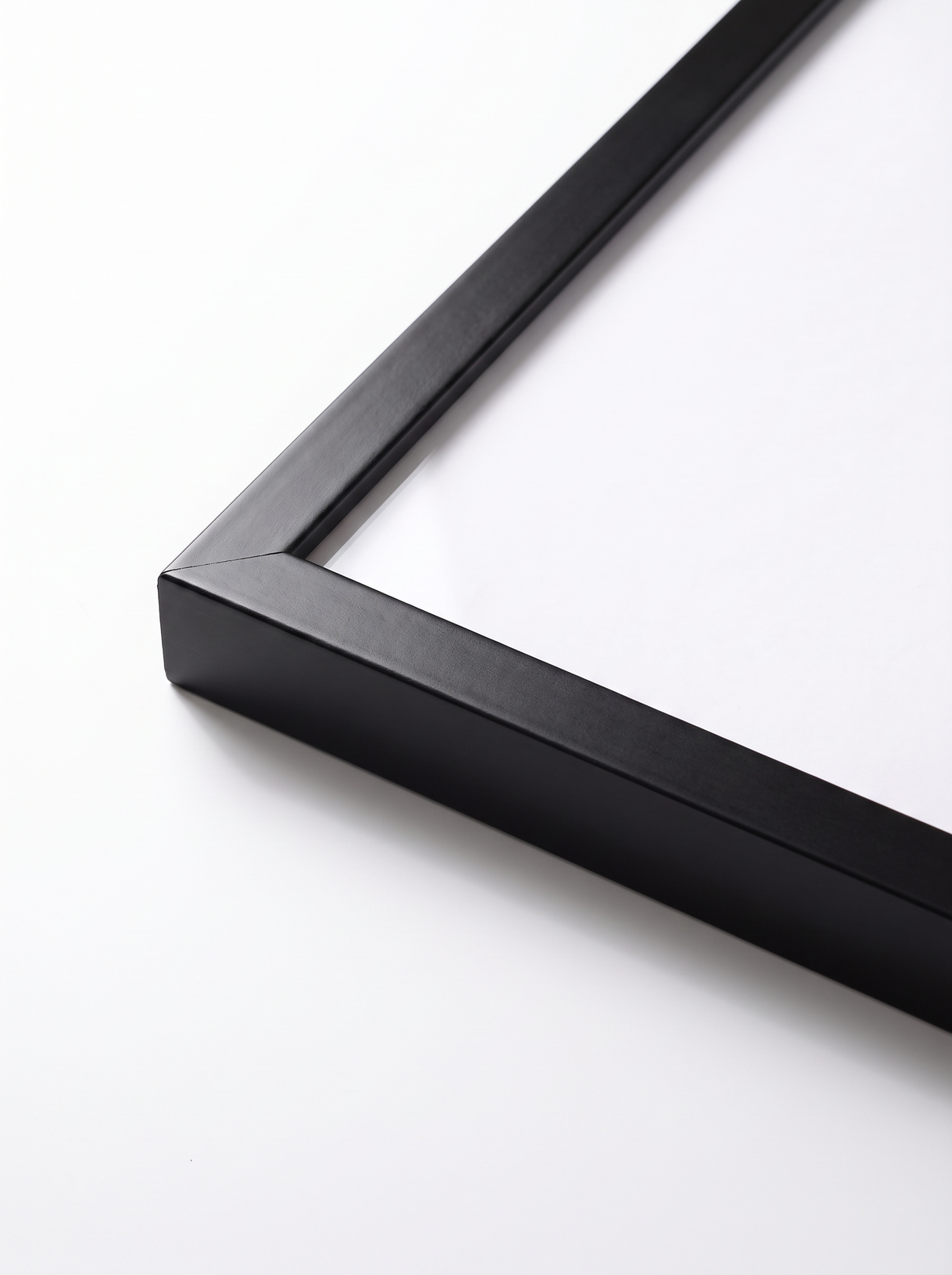
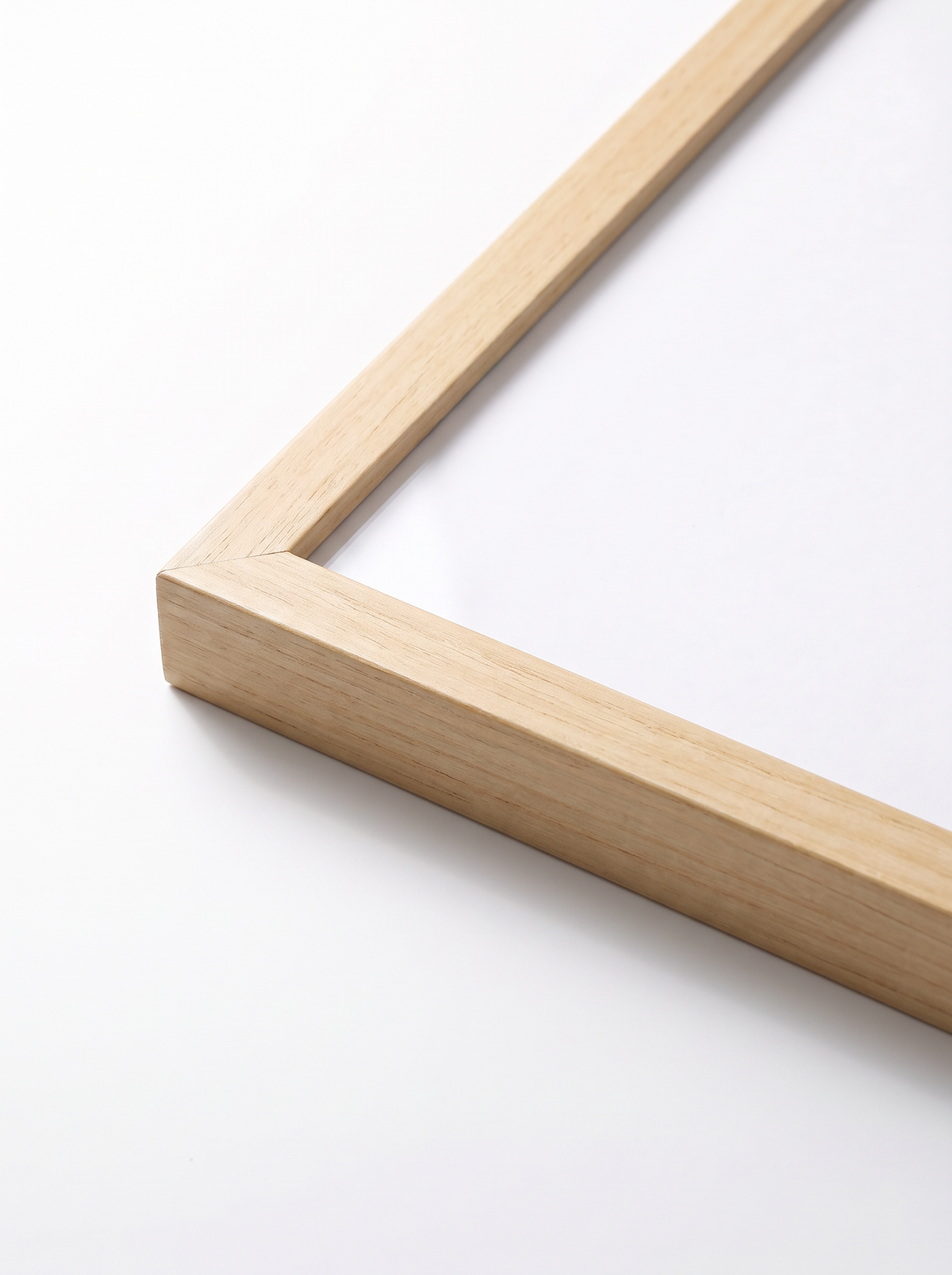
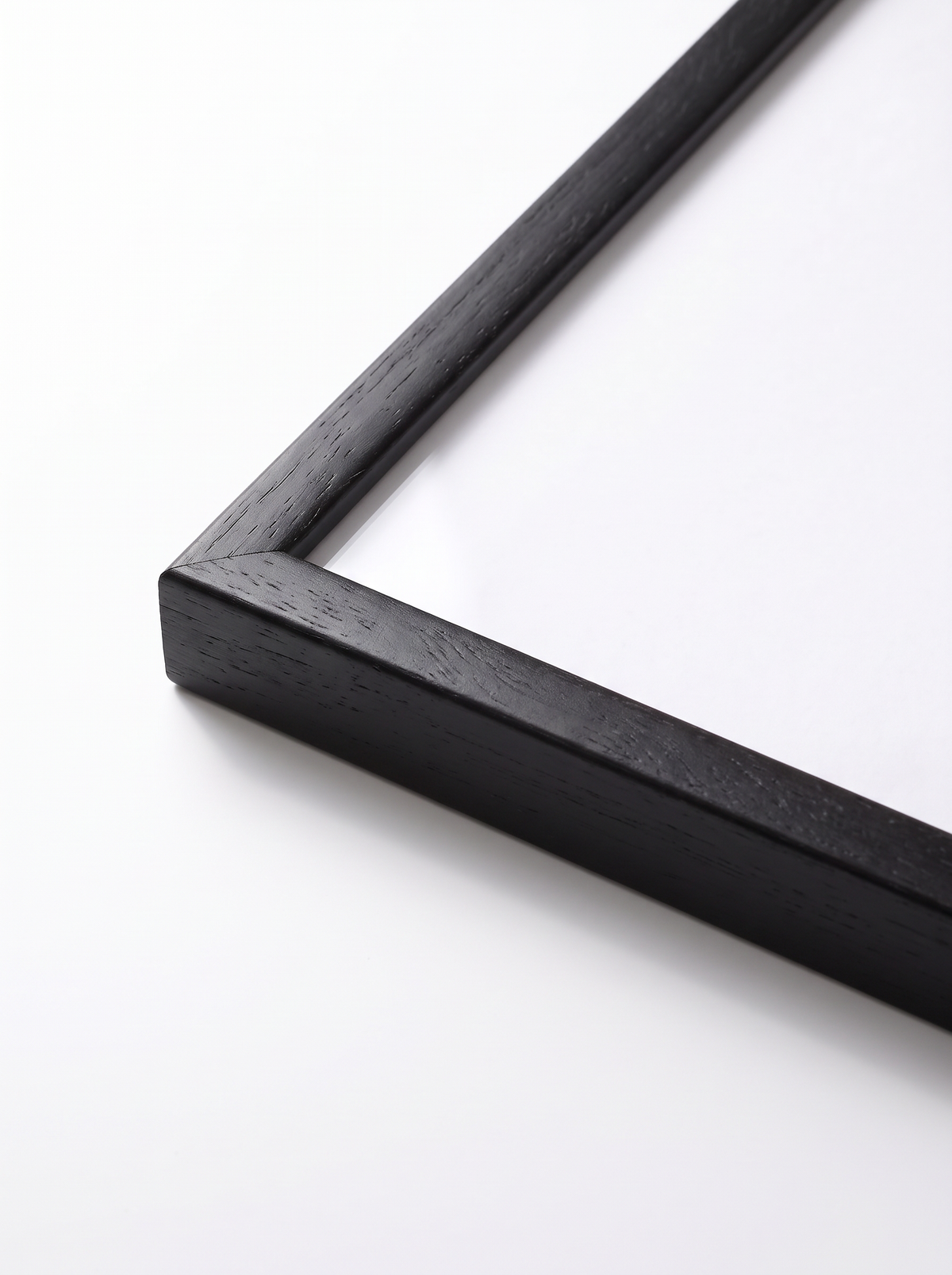
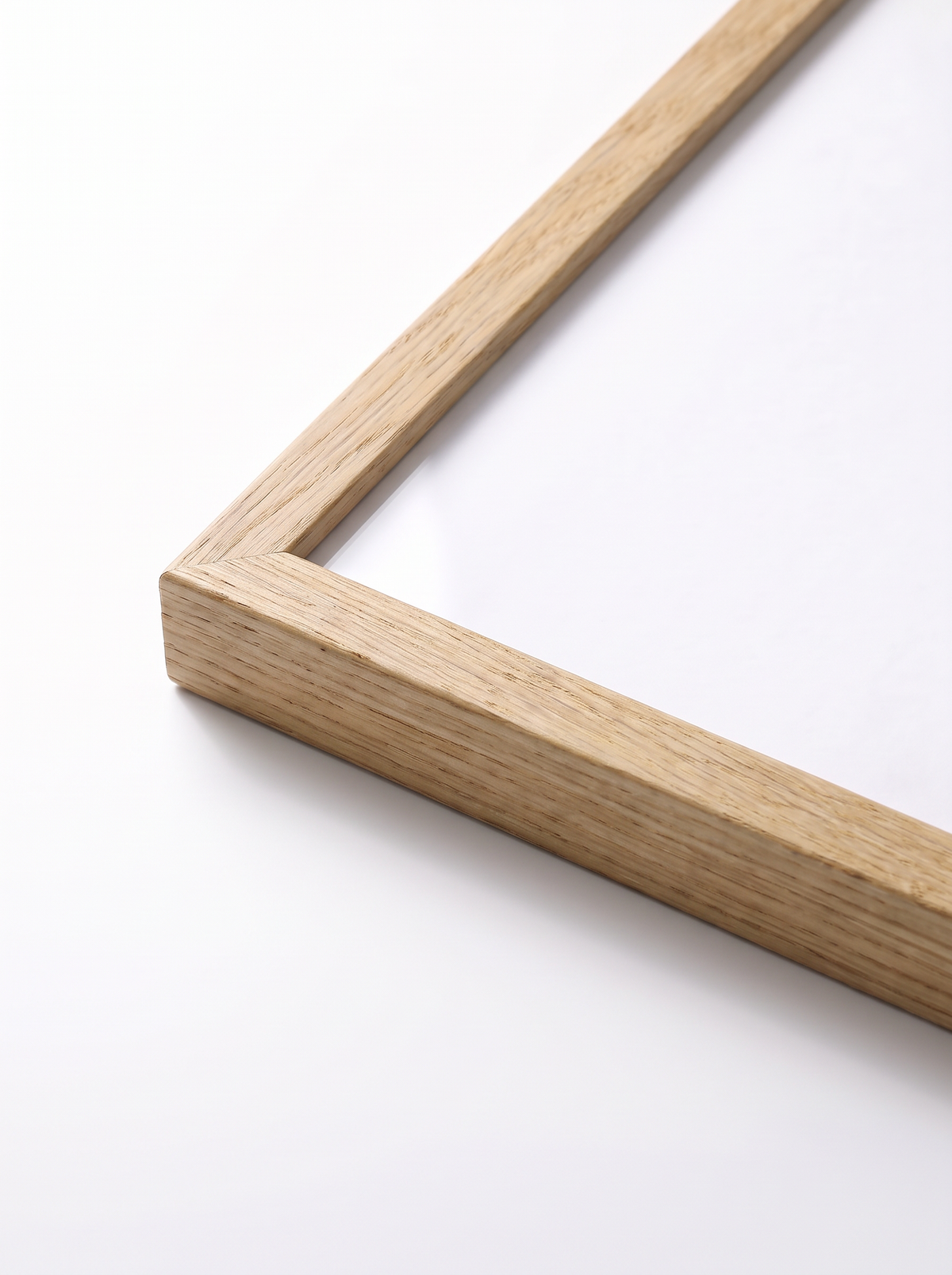
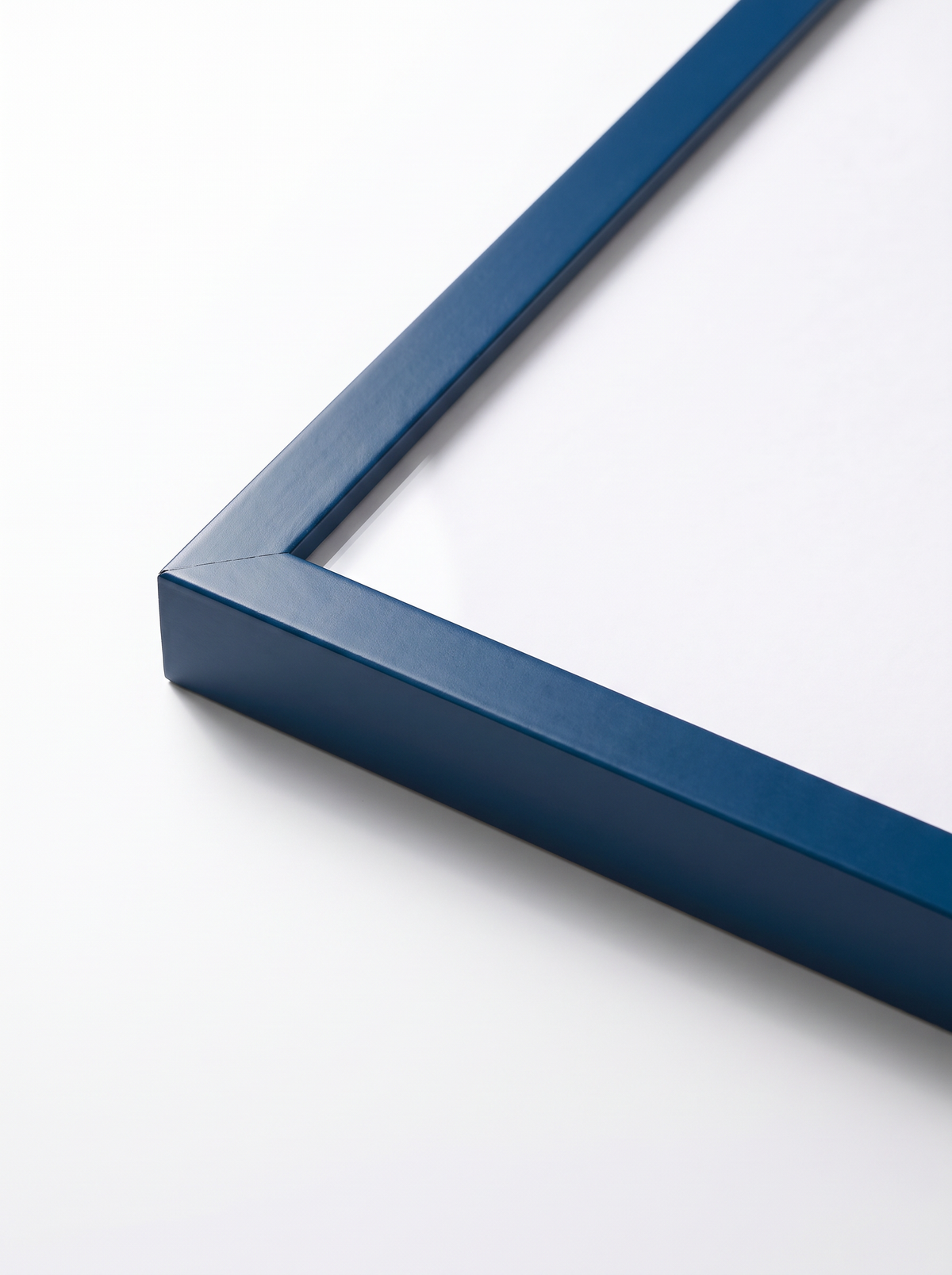
For a calm, modern wall, use one frame finish throughout, black, white or a natural wood like oak. For a more eclectic look, mix two or three finishes that share a tone, such as walnut with oak, or black with a dark stain. Thin mouldings suit tight grids; slightly wider ones give a salon wall more presence.
Not sure which sizes to combine? Our picture frame size guide shows how big each frame is on the wall. You can also upload a photo of each print and preview it in any of our picture frames before you buy, or start from one of our ready-made gallery wall sets.
Key takeaways
- Treat the gallery wall as one big picture: centre of the group at 145 to 150 cm, or 20 to 30 cm above furniture.
- Keep gaps even, around 5 to 8 cm.
- Above furniture, make the group about two-thirds the furniture's width.
- Most gallery walls use 3 to 9 frames: even numbers for grids, odd numbers for salon walls.
- Start with an anchor piece and repeat one element, such as the frame finish or a colour.
Common questions
What is the rule for gallery walls?
Treat the whole group as one large picture. Keep the gaps between frames even, around 5 to 8 cm, hang the centre of the group at about 145 to 150 cm from the floor, and above furniture make the group roughly two-thirds the width of the piece below it.
How many pictures should be in a gallery wall?
Usually between 3 and 9. Three to five frames suit a small wall or the space above a sideboard; six to nine work above a sofa or bed; very large walls can take more. Grids look best with an even number, mixed salon walls with an odd number.
How far apart should frames be on a gallery wall?
About 5 to 8 cm. Go closer, around 4 to 5 cm, for small frames, and up to about 10 cm on a very large wall. What matters most is keeping the gaps the same throughout.
How do I make a gallery wall interesting?
Start with one larger anchor piece, mix sizes and orientations around it, and tie everything together with one repeated element, such as the same frame finish, a shared colour, or mounts on every print.
Are gallery walls out of style in 2026?
No, but the look has shifted. Fewer, larger pieces, a consistent frame finish and a clear colour palette are more common now than walls crowded with dozens of small frames.
Is there a gallery wall planner or template I can use?
Yes. You can cut paper templates the size of each frame and tape them to the wall, or plan the whole wall to scale online with our Gallery Wall Designer before you drill any holes.
More framing guides: how to hang a picture, photo and picture frame sizes and how to frame a canvas painting.

About the author: Trevor Beers
Trevor Beers is a guest writer for East Side Studio London. With two degrees in English language and a passion for contemporary art, he explores the intersections of culture, criticism, and collecting. Splitting his time between London and Austin, Trevor brings an academic eye to emerging art scenes, offering thoughtful perspectives on today's evolving art landscape.